Afghanistan
 Zimbabwe
1st innings (away)
Afghanistan
Zimbabwe
 India Women
 Zimbabwe Women
Afghanistan U19
 Bangladesh U19
 Ajman
 Sharjah
 Manhattan Yorkers
 San Ramon Grizzlies
 MC Alger U20
 RC Kouba U20
 USM Alger (W)
 Afak Relizane(w)
 RCG Oran U20
 CR Temouchent U20
 Brothers Union
 Abahani Limited Dhaka
 Fakirerpool Young Mens Club
 Rahmatgonj MFS
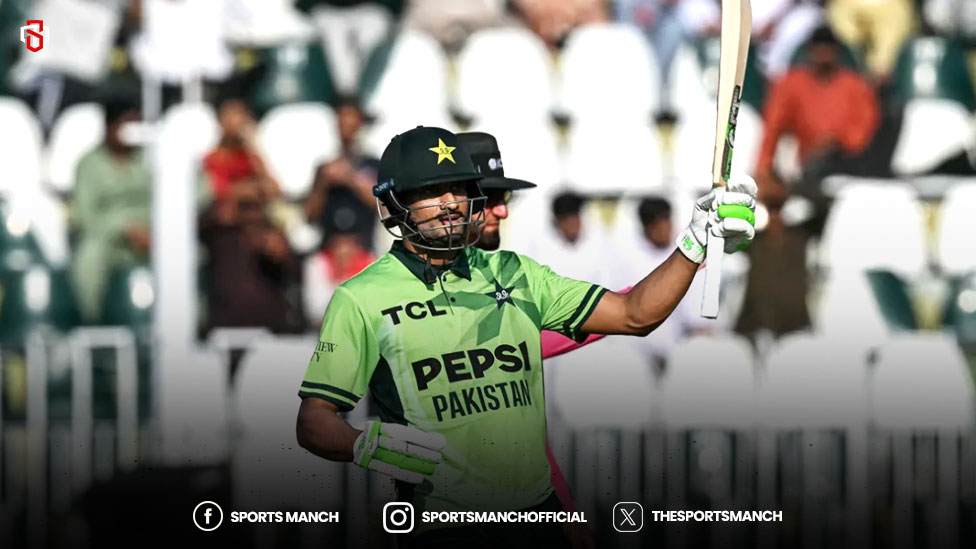
Pakistani cricket has never been about quiet, predictable afternoons. It’s always chaotic. Just when you think a match is slipping away into another routine collapse, someone pops up out of nowhere and completely changes the script. That is exactly what went down at the Rawalpindi Cricket Stadium during the second match of the 2026 ODI Tri-Nation Series. Pakistan were in real trouble against England. The top order had crumbled, the scoreboard read 133 for 5, and the crowd fell silent. The match was sliding away fast.
Then came Hasan Nawaz. Instead of ducking into his shell or trying to block his way out of trouble, the young batter decided to fight fire with fire. He played a stunning, fearless knock of 79 runs off just 74 balls. With five crisp boundaries and four huge sixes, he dragged Pakistan all the way to 302 for 9 in 50 overs. That sudden counter-attack didn’t just save face; it turned the game around and laid the foundation for Pakistan’s eventual 87-run win over England.
To anyone casually tuning in, Hasan’s innings against a strong English attack might have felt like a fluke. But if you’ve been following domestic cricket in Pakistan over the last couple of seasons, you know this wasn’t an accident.
Hasan didn’t build his name just by making runs; he built it by changing the energy of games. Modern ODI cricket has changed completely over the last few years. You simply can’t afford middle-order players who take thirty balls just to get used to the pitch while letting the run rate freeze. Nawaz represents a totally different mindset.
He stands tall at the crease, relies on a clean, powerful bat swing, and doesn’t get intimidated by big names or international caps. Whether facing 140 kph pace or experienced spinners, he looks for boundary options right from the start. That strike rate of 106.76 in Rawalpindi wasn’t a lucky day at the office; it is just how he naturally plays the game.
To really appreciate what Hasan did that afternoon, you have to look at the state of the match when he walked out. Gus Atkinson had stunned the home crowd on the very first ball of the game by sending Fakhar Zaman packing. Saim Ayub didn’t last very long either.
Babar Azam tried to hold things together with a ground-out 34, and Saad Baig chipped in with 35, but England kept striking at regular intervals. When Salman Ali Agha fell to Adil Rashid for just 16, followed quickly by Saad, Pakistan were staring at a disastrous collapse at 133 for 5 in the 28th over. With more than twenty overs still left, most teams in that spot would try to nurse the ball around, avoid any high-risk shots, and hope to scramble their way to 220.
Hasan Nawaz completely threw out that safe playbook. He knew 220 against England’s batting lineup was a guaranteed loss anyway. So, he went after their bowling immediately. When Will Jacks and Adil tried to bowl tight lines, Hasan used his feet, created room, and launched them straight back over their heads. By hitting boundaries early in his innings, he forced English skipper Harry Brook to pull his fielders back, opening up easy singles and taking the pressure right off Pakistan.
No big innings happen in a vacuum. Hasan’s counter-attack worked so well because he had Arafat Minhas keeping things steady at the other end. Coming together with the team in deep trouble, the two young players put on a match-defining 78-run partnership for the sixth wicket.
They balanced each other out perfectly. While Hasan was taking down the boundary balls, Minhas was smart enough to keep turning the strike over, working his way to a really impressive 59 off 58 balls. Together, they broke.
Messing with bowling lengths: By clearing the boundary rope four times, Hasan forced Jamie Overton and Gus Atkinson away from their comfortable back-of-a-length deliveries.
Cutting down dot balls: They ran hard between the wickets, ensuring England couldn’t bowl three or four quiet overs in a row to build pressure.
Setting up late push: Their stand carried Pakistan past 210, giving Faheem Ashraf the perfect stage to come in late and smash a quickfire 39 off 26 balls, driving the total past 300.
By the time Hasan finally mis-timed one off Overton in the 40th over, the damage was already done. What started as a desperate rescue job had turned into a total match-winning platform.
For years now, cricket experts have criticised Pakistan’s ODI setup for playing a bit too timidly between overs 11 and 40. In modern white-ball cricket, if you go into a shell during the middle overs, you simply get left behind by top international sides.
Hasan Nawaz’s knock of 79 was a blueprint for how Pakistan need to approach this format moving forward. It showed that playing aggressively doesn’t mean slogging blindly at every ball. It’s about backing your strength, punishing anything loose without second thoughts, and making the opposition captain panic about his field settings.
When a middle-order batter can hit sixes without taking wild risks, bowlers lose their line, fielders get pushed back to the fence, and easy runs start flowing everywhere. That is exactly what happened in Rawalpindi.
This wasn’t just another nice fifty for Hasan Nawaz; it was a proper career-defining knock. In a high-stakes series where spots for upcoming major tournaments are up for grabs, showing you can step up when the team is 133 for 5 makes you practically undroppable.
Teams are going to study his hitting areas now and come up with fresh plans against him in the next few matches. But if Hasan keeps playing with this same clear mindset, calm body language, and natural power, Pakistan might have finally answered their long-standing search for a proper middle-order match-winner.
READ: Sahibzada Farhan: From overlooked domestic star to Pakistan captain
Iqra Afroz is a sports content writer at SportsManch with a growing passion for cricket and contemporary sports media. She specialises in news writing and digital content, with a focus on delivering concise, accurate and reader-friendly stories. With a keen eye for detail, Iqra aims to provide informative and engaging sports coverage while continuing to develop her voice as a modern sports journalist.