Brisbane Heat Women
 Sydney Sixers Women
1st innings (away)
Brisbane Heat Women
Sydney Sixers Women
 Namibia
 Ireland
 Oman U19
 Afghanistan U19
 Mid West Rhinos
 Mountaineers
 Mashonaland Eagles
 Matabeleland Tuskers
 FC Khatlon
 Khujand
 Metalurh Zaporizhya
 Rebel Kyiv
 Mumbai Strikers
 Football School of India
 Techtro Swades United FC
 Garhwal Heroes FC
 Brisbane Roar
 Auckland FC
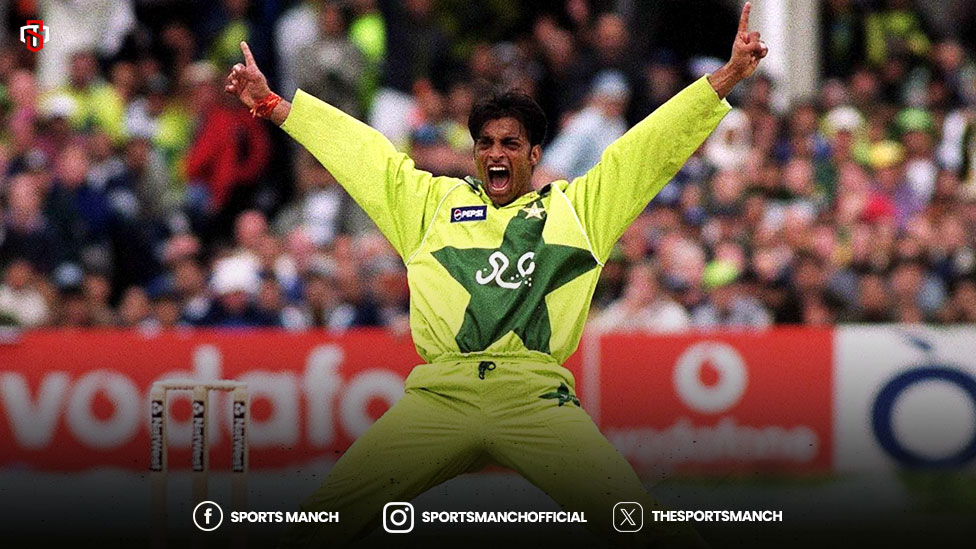
Shoaib Akhtar, the “Rawalpindi Express,” didn’t just bowl fast; he made batters fear the ball. A fearless fast bowler with raw pace and a fiery attitude, he made his international debut for Pakistan in 1997 and went on to terrorise batting line-ups across Tests, ODIs, and T20Is. His name remains synonymous with one thing: speed.
On August 13, 1975, Shoaib was born in Rawalpindi, Punjab, Pakistan. His early life was marked by physical issues that gave him no chance of becoming a future athlete. As a toddler, Akhtar suffered from hypermobile joints and flat feet, which delayed his ability to walk properly until the age of three.
Yet, his spirit and stubborn determination turned his disability into his strength; after sharpening his raw pace in the tape-ball street cricket tournaments of Rawalpindi, Akhtar climbed through the domestic ranks, making his First-Class debut. His rapid development caught the attention of former Pakistan captain Majid Khan, leading to his international Test debut against the West Indies at Rawalpindi on November 29, 1997. This became a turning point in Shoaib’s life.
Shoaib made cricket history on February 22, 2003, during a World Cup match between Pakistan and England at Newlands Stadium in Cape Town, South Africa. While bowling to England’s batsman Nick Knight, Akhtar bowled a delivery on the last ball of his first over that reached a speed of 100.23 mph (161.3 km/h). This made him the first bowler in cricket history to cross the 100 mph speed mark.
Love sports updates on the go? Click here to follow us on WhatsApp Channel
| Bowler | Country | Speed (mph/km/h) | Match & Venue | Year |
| Shoaib Akhtar | Pakistan | 100.23 mph / 161.3 km/h | vs England, Cape Town (World Cup) | 2003 |
| Brett Lee | Australia | 100.1 mph / 161.1 km/h | vs New Zealand, Napier | 2005 |
| Shaun Tait | Australia | 100.1 mph / 161.1 km/h | vs England, Lord’s | 2010 |
| Jeffrey Thomson | Australia | 99.8 mph / 160.6 km/h | Fast Bowling Study, Perth | 1975 |
| Mitchell Starc | Australia | 99.7 mph / 160.4 km/h | vs New Zealand, Perth | 2015 |
During the 1999 Asian Test Championship match between India and Pakistan at Eden Gardens, Kolkata, Shoaib Akhtar produced one of cricket’s most unforgettable moments. India were comfortably placed at 147 for 2 while chasing Pakistan’s first-innings total of 185.
Akhtar struck twice in consecutive deliveries, dismissing Rahul Dravid with a fast, in-swinging full toss that hit his leg stump. Sachin Tendulkar came in next, but Shoaib bowled another rapid delivery that sent his middle stump flying, giving him a golden duck.
The Rawalpindi Express celebrated his victory after taking two of India’s finest batters in consecutive deliveries and silencing the packed Eden Gardens.
Shoaib made a sensational IPL debut for Kolkata Knight Riders against Delhi Daredevils in 2008, taking four wickets for just 11 runs in three overs. Despite Kolkata scoring only 133 runs, Akhtar’s fiery bowling helped secure a 23-run victory.
He dismissed Virender Sehwag for a golden duck in the first over, then took out Gautam Gambhir, AB de Villiers, and Manoj Tiwary, leaving Delhi at 32 for 4. His express pace and aggressive celebrations energised the Eden Gardens crowd.
Akhtar’s career was never far from controversy, earning him a reputation as cricket’s ultimate rebel:
1996: Dropped from Pakistan’s squad for the Sahara Cup against India due to indiscipline and poor attitude, delaying his international debut by over a year.
1997: Tours England with Pakistan A and makes an impact on and off the field. Cited for indiscipline but made his international debut in November in the second Test against West Indies in Rawalpindi.
1998: Took 5 for 43 in February during Pakistan’s first Test victory in South Africa.
1999: Breakthrough year, beginning with two memorable deliveries in Kolkata. Becomes one of the leading wicket-takers and stars of the World Cup. Signs a contract with Nottinghamshire but is called for his bowling action in Australia, marking a pattern of highs and lows.
2000: His bowling action is cleared, but rib, side strain, shoulder, knee and ankle injuries disrupt his season and rule him out of several matches.
2001: Returns against New Zealand after ten months, taking five wickets, but suffers a hamstring injury in the next game. His bowling action is questioned again but cleared following a University of Western Australia report. Injuries and poor health affect his season.
2002: Hit by a brick thrown by a crowd member in Dhaka. Recovered to defeat New Zealand twice at home and bowled the first-ever 100 mph delivery. Later troubles include an ODI ban for throwing a bottle into the crowd, a ball-tampering incident, and a knee injury.
2003: Dropped after a poor World Cup and warned to improve his conduct. Recalled in May but banned for ball tampering. Appointed vice-captain against South Africa, he faced a lawsuit for attending a fashion show on a religiously significant night and received a ban for abusing Paul Adams. Despite injuries and a lot of criticism, he still helped Pakistan defeat New Zealand by seven wickets in one innings.
2004: A back injury during the India series spread rumours that it was a lie and raised doubts about his commitment, but a medical inquiry confirmed it was genuine. Against Australia, he fought hard in the first two Tests but faced disciplinary action and a shoulder injury. By the final Test, he appeared physically exhausted amid reports of problems with team management.
2005: Hamstring injuries and fitness problems forced him to miss several tours. His relationship with Inzamam-ul-Haq and Bob Woolmer deteriorated. After criticism at Worcestershire, he returned against England, took 17 wickets and silenced critics, although an ankle injury emerged in the final Test.
2006: Greg Chappell questioned his bowling action after the Faisalabad Test against India. An ankle stress fracture and a degenerative knee condition threatened his career. He was also banned for two years after testing positive for Nandrolone, but a three-man tribunal overturned the verdict a month later.
2007: Named in the World Cup squad but ruled unfit due to injury. A televised dispute with Bob Woolmer resulted in a fine. Later, disciplinary issues, leaving a training camp without permission and a dressing-room fight with Mohammad Asif, led to a 13-match ban, a fine of approximately US$57,000 and two years of probation.
2008: Demoted from Pakistan’s top central-contract category to a retainership. After accusing the board of double standards, he appealed the five-year ban. The ban was temporarily suspended for one month, making him eligible to represent Kolkata Knight Riders in the IPL.
Even after retirement, Shoaib Akhtar has remained connected with cricket. He created his own YouTube channel and made videos to share his opinions on cricket, analyse performances, and discuss controversies, gaining millions of followers while encouraging young, aspiring cricketers. He is inspirational to many new talents and will be remembered as one of the best fast bowlers in Pakistan’s cricket history.
READ: Babar Azam ODI journey: Brilliant numbers, stubborn questions
Aleena is a sports writer at Sports Manch, with a keen interest in cricket and sports journalism. Her work focuses on creative storytelling, feature writing, and SEO content, with an emphasis on producing clear, engaging, and well-researched stories. She is passionate about exploring compelling sports narratives and continues to develop her skills as a versatile and impactful writer.