 Dallas Xforia Giants
 Manhattan Yorkers
1st innings (away)
Dallas Xforia Giants
Manhattan Yorkers
 San Ramon Grizzlies
 Baltimore Royals
 Sharjah
 Abu Dhabi
 Sri Lanka
 England
 Australia Women
 New Zealand Women
 Bangalore Dream United FC
 FC United Stars
 Palmeiras - SP
 Fluminense - RJ
 Slovenia U17
 Czechia Republic U17
 Moldova U17
 Belarus U17
 Hungary U17
 Malta U17
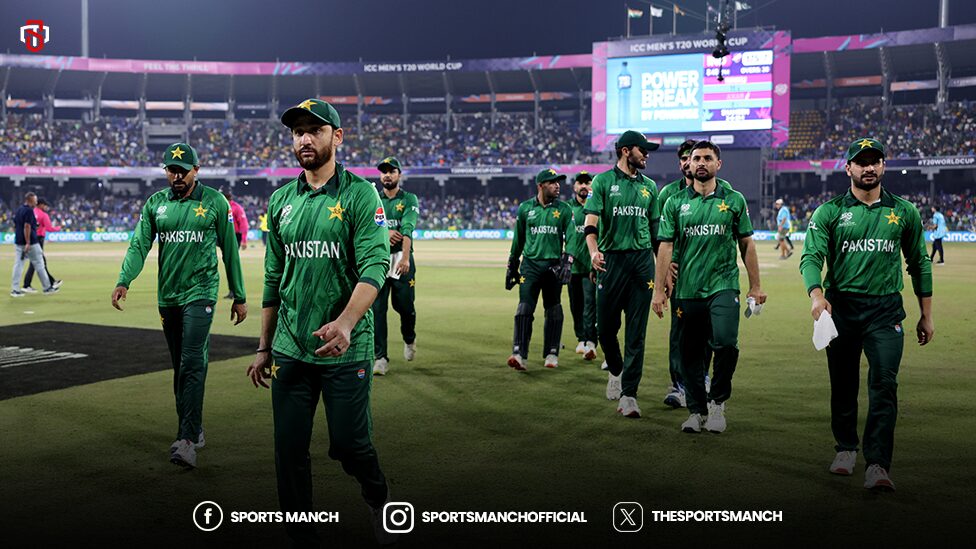
It was a similar story for the Pakistan cricket team in the ICC T20 World Cup 2026. Hopes were high once again, but the results followed a similar pattern. It was a repeat of the past — marked by inconsistency, combination woes, and plenty of tensions before the tournament even began.
The team, including senior figures such as Babar Azam, Shadab Khan, and Shaheen Afridi, once again found itself hovering in the same competitive territory it has occupied for several years: strong enough to compete, but not modern or ruthless enough to dominate the opposition.
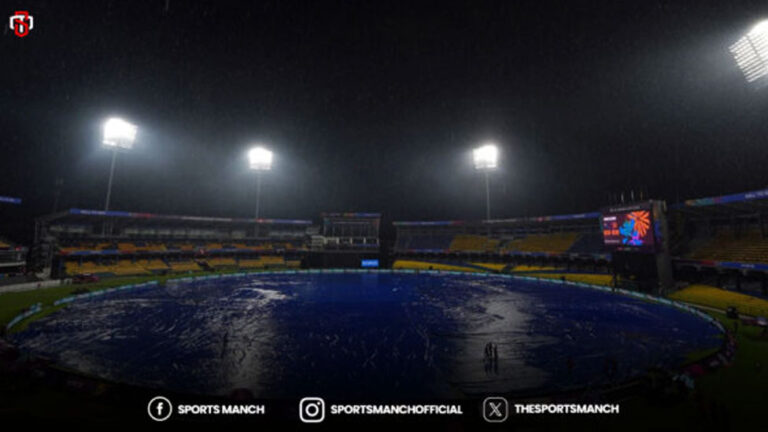
The campaign ended despite a late victory over Sri Lanka in the Super Eights, as Green Shirts fell short on Net Run Rate.
It was a harsh mathematical reminder that tournament cricket punishes hesitation and rewards sustained aggression. However, the deeper issue was not confined to a single match. It was structurally rooted in selection decisions, middle-order fragility, tactical conservatism, and a noticeable mismatch with evolving T20 trends.
Pakistan once again placed its faith in its experienced trio, Babar Azam, Shaheen Afridi, and Shadab Khan, banking on pedigree rather than the template, which skipper Salman Ali Agha vowed to play after taking over captaincy from Mohammad Rizwan.
Babar Azam was called to the national T20I side following Pakistan’s Asia Cup 2025 campaign. He had been dropped from the side in December 2024 due to concerns about his strike rate and was not part of the limited-overs plans.
However, his failure to live up to the expectations further compounded Pakistan’s woes, and he was eventually benched for two games, one against Sri Lanka.
The reason for picking him in the squad was his method of accumulation before acceleration in low-scoring matches. Pitches in Sri Lanka were conducive to his style of play. He batted at the No.04 position, a position unusual for him, and the outcome turned out to be more of a disaster.
Since his return to the T20I side, Babar has only scored 373 runs in 15 innings at an average of 24.87. He managed to cross the fifty-run mark on three occasions, with 74 being his highest score.
Interestingly, his strike rate is also on the lower side, which is 82.08, as compared to his overall T20I career, which is 128.02.
Shaheen Shah Afridi entered the tournament with strong reputation metrics and an injury cloud hanging over him. In the 2025/26 season, the pacer played 11 matches and took 11 wickets, averaging close to 18.75 with the ball in T20Is. However, his economy rate had climbed to around 8.5–9 runs per over — slightly high for a frontline strike bowler.
He was off colour in most matches for the Pakistan cricket team, except the T20 World Cup fixture against England, where he took four wickets. Opposition teams appeared prepared for his new-ball burst, and he seemed to lose some of his venom, which he is known for.
The left-arm pacer was also preferred over Salman Mirza, who bowled decently when given the opportunity. Shaheen’s inclusion in the high-stakes clash against India proved costly to Pakistan, as his second over of the innings set the tone for a big total.
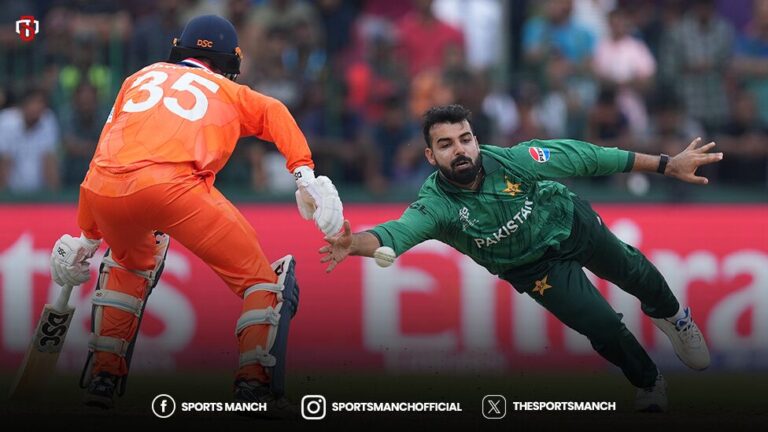
Shadab Khan was another missing piece of the puzzle as his selection reflected Pakistan’s continued preference for multi-skilled players.
Although he provided balance, he neither proved to be a dominant match-winning spinner nor a consistently reliable finisher. In T20 cricket, balance without impact often proves insufficient.
His inconsistent bowling in the middle overs allowed the opposition batters to settle and resulted in big totals.
Every World Cup cycle brings selection debates. In 2026, criticism centred on whether Pakistan overlooked aggressive domestic performers in favour of established names.
Several batters in the Pakistan Super League (PSL) had recorded strike rates above 150 during the season preceding the tournament. Yet the national squad largely leaned toward familiar faces.
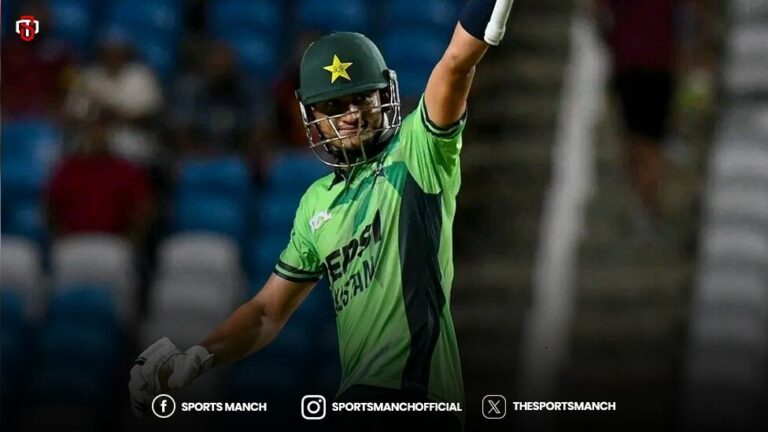
One notable omission was that of middle-order batter Hasan Nawaz, who was part of the team’s plans before the World Cup but was excluded, leaving a question mark over selection.
Modern T20 squads are constructed around specialist explosive openers, middle-over enforcers, and death-over finishers. Pakistan instead selected multiple utility cricketers, and the team was fully stacked with all-rounders, creating redundancy rather than clarity of roles.
The absence of a dedicated, power-hitting middle-order batter was glaring throughout the tournament.
This time around, the problem was with a weak middle order. In matches where Pakistan’s openers performed well, their middle-order batters faltered, leaving them a few runs short of the totals expected.
There was no consistent middle-order aggressor capable of striking at 160 or above. When early wickets fell, the priority shifted to rebuilding rather than dominating. Conversely, once the platform was set up, acceleration often stalled due to a lack of specialist finishers.
There were too many All-Rounders and not enough specialist batters. On paper, Pakistan’s squad appeared flexible. Multiple players were categorised as batting all-rounders or bowling all-rounders, theoretically offering depth.
Love sports updates on the go? Click here to follow us on WhatsApp Channel
In reality, this is a diluted expertise. Modern T20 teams structure their sides around clearly defined roles: Powerplay aggressor, Middle-overs spin attacker, Death-over finisher, and Specialist death bowler.
Pakistan’s squad blurred these distinctions. Carrying several part-time options weakened both batting explosiveness and bowling precision.
All-rounders are valuable assets — but only when they excel significantly in at least one discipline. In Pakistan’s case, versatility often replaced specialisation.
One of the defining moments of Pakistan’s campaign was winning a must-win match but still failing to qualify due to net run rate. The elimination was not caused solely by that final victory. It was built over the course of the tournament.
Conservative batting in earlier matches prevented Pakistan from building commanding winning margins. Defensive field placements allowed opponents to score freely in death overs. Acceleration came too late in the innings rather than during the power play.
Net run rate is cumulative. It reflects intent across all matches, not just the final game. Pakistan’s inability to finish games ruthlessly earlier in the competition left them dependent on mathematical permutations. This was not a misfortune. It was strategic conservatism.
Pakistan’s structured approach still emphasised classical batting tempo and conventional new-ball swing in an era demanding relentless aggression and tactical adaptability.
If we compare Pakistan’s approach to other leading sides, the contrast becomes clearer. England embraced fearless batting depth, promoting hitters regardless of situation. India invested in aggressive middle-order reinforcements and flexible matchups.
Australia emphasised clearly defined roles and tactical clarity. Pakistan, meanwhile, appeared caught between tradition and transformation.
Modern T20 cricket prioritises strike rates above 150 for top-order batters. Notably, data-driven matchups, bowling variations over raw pace, and specialists over multi-role generalists are also part of the modern playbook.
Although Pakistan acknowledged these trends, it did not fully commit to them.
On big stages like the T20 World Cup, leadership must be decisive and proactive.
Field placements, bowling changes, and batting promotions need to anticipate momentum shifts rather than react to them. Pakistan frequently responded to pressure instead of dictating terms.
Pakistan cricket team captain Salman Ali Agha’s leadership remained composed but, at times, overly cautious during the T20 World Cup. In a format where momentum changes rapidly, hesitation can prove costly.
However, the larger issue extends beyond a single captain. It is systemic — involving selection philosophy, developmental planning, and the broader cricketing structure.
Pakistan’s ICC T20 World Cup 2026 campaign resembled several previous global tournaments: strong bowling spells, batting collapses under pressure, narrow margins, and qualification dependent on other results.
This recurring pattern suggests structural stagnation rather than isolated failure.
Unless roles are redefined, high-impact batters prioritised, and tactical planning modernised, Pakistan risks remaining competitive but not dominant. The team consistently hovers near excellence without fully achieving it.
Pakistan cricket team’s exit from the T20 World Cup was not dramatic — it was predictable, and it will remain that way until bold decisions are taken.
The reliance on tried-and-tested players like Babar Azam, Shaheen Afridi, and Shadab Khan, without aggressively refreshing the core, reflected institutional risk aversion. Selection leaned toward familiarity. Team balance favoured flexibility over specialisation. Batting tempo lagged behind global standards.
Nowadays, T20 cricket rewards boldness in selection, strategy, and mindset.
Pakistan now faces a defining choice: evolve with the format or remain in the same competitive territory, promising and dangerous yet perpetually short of transformation.
Until structural clarity replaces conservative instinct and aggression takes over hesitation, history may continue to repeat itself on the global stage.
READ: Ex-Pakistan cricketer rips into Shadab over remarks on India defeat

Aliza Shujaat is a sports journalist at SportsManch, specialising in cricket. She previously served as an International Sports Sub-Editor at Geo News, where she covered global sporting events and developments. Her work centres on tactical analysis, player performance trends, and the evolving strategies shaping modern cricket.